Thresholds
3 September - 18 October 2026
Jacob Lucius Cartwright

We rarely think of the places around us as active participants in our lives.
Yet consider how differently we move through a cathedral, a garden, a mountain path or the quiet enclosure of a monastery. Our bodies seem to understand something before our minds have named it. We lower our voices. We slow our pace. We look upwards, or inwards. A change in scale, light, acoustics or material alters not only how we move through a place, but how we experience ourselves within it. Architecture and landscape are not simply settings; they shape the way our experience unfolds.
Perhaps this is why humanity has so often given its most intangible ideas physical form through place - temples, gardens, sanctuaries and monuments constructed not simply to occupy the world, but to give form to devotion, memory, grief or transcendence.
Few materials have carried these ambitions as persistently as marble.
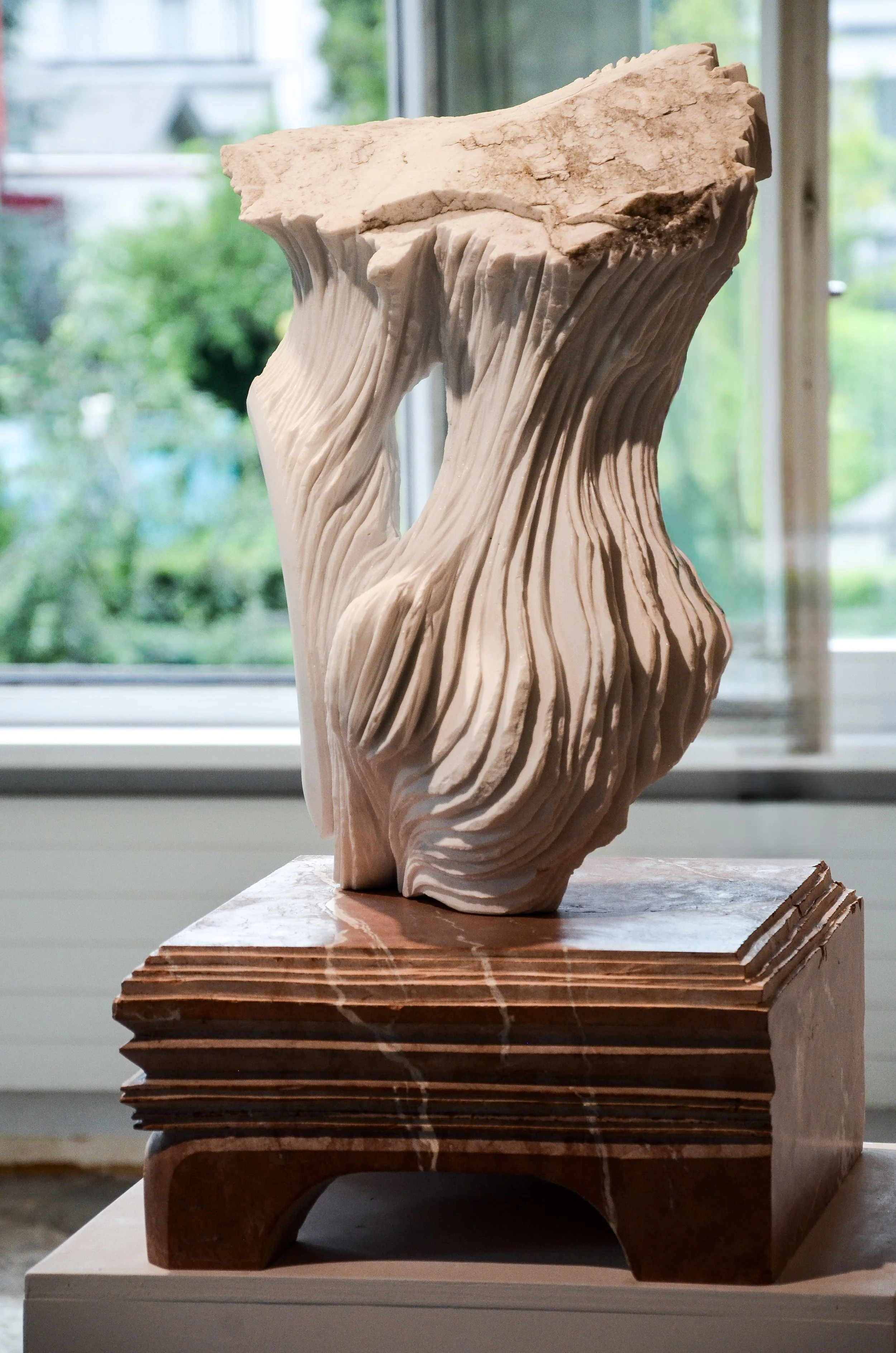
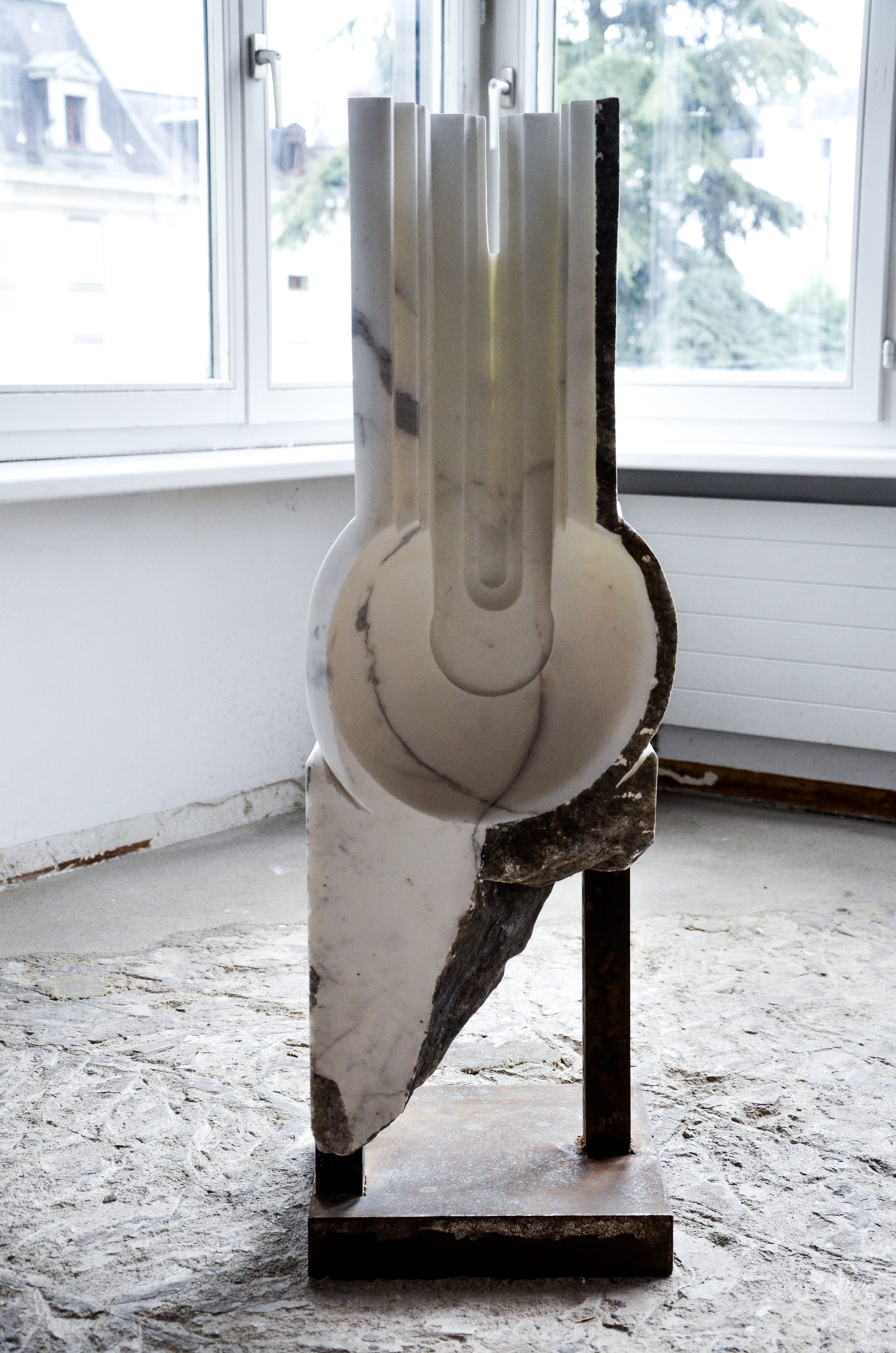
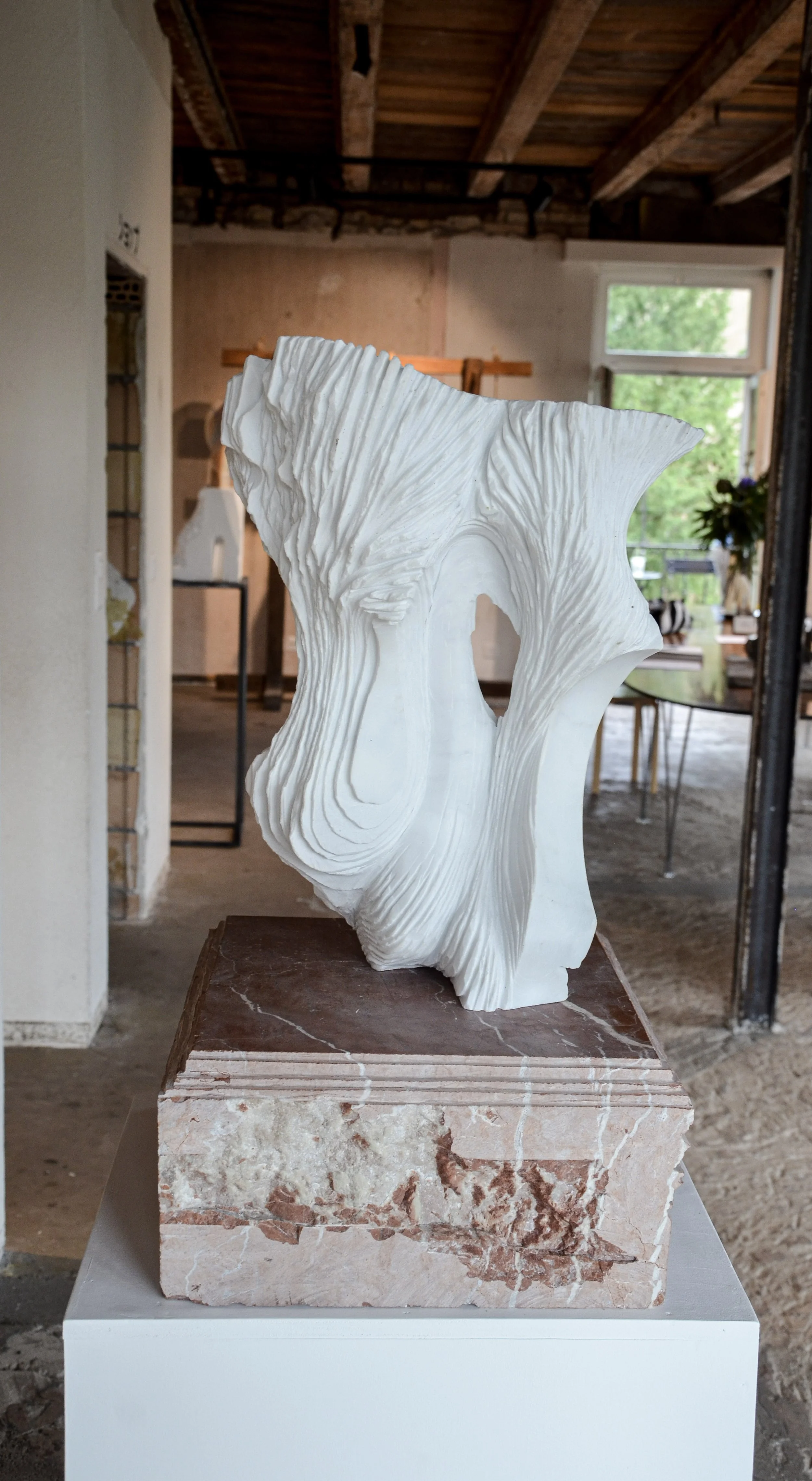
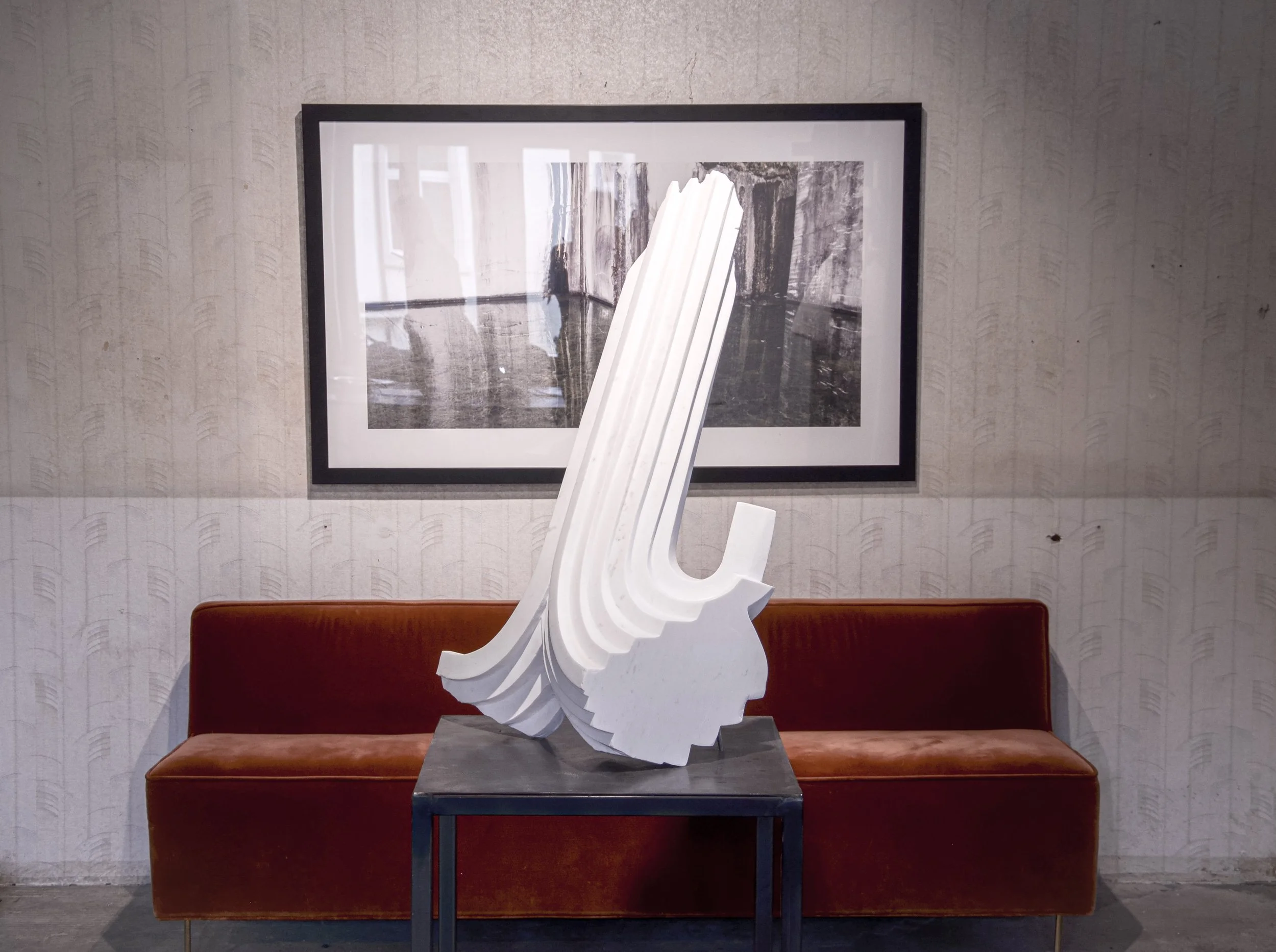
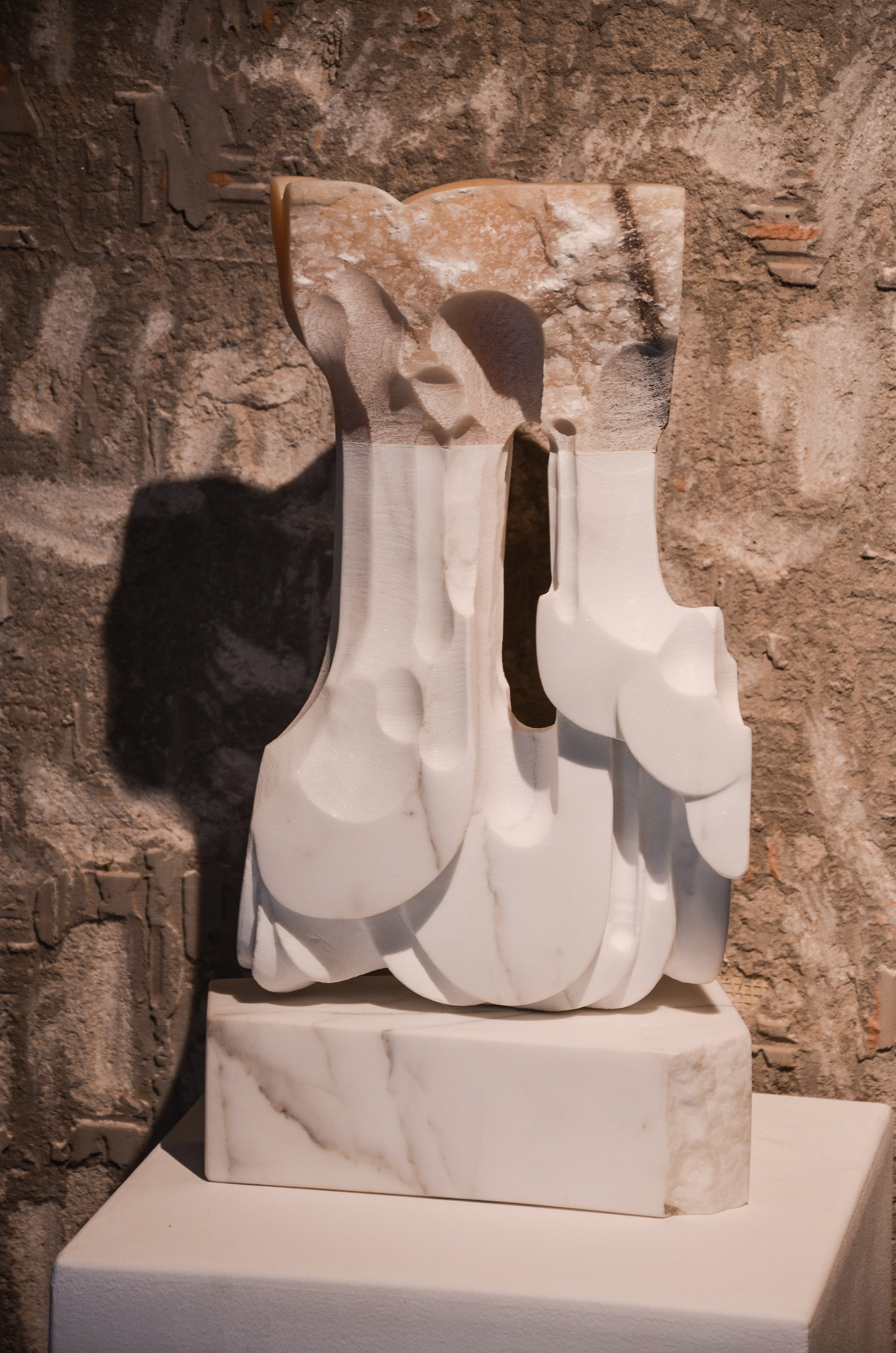
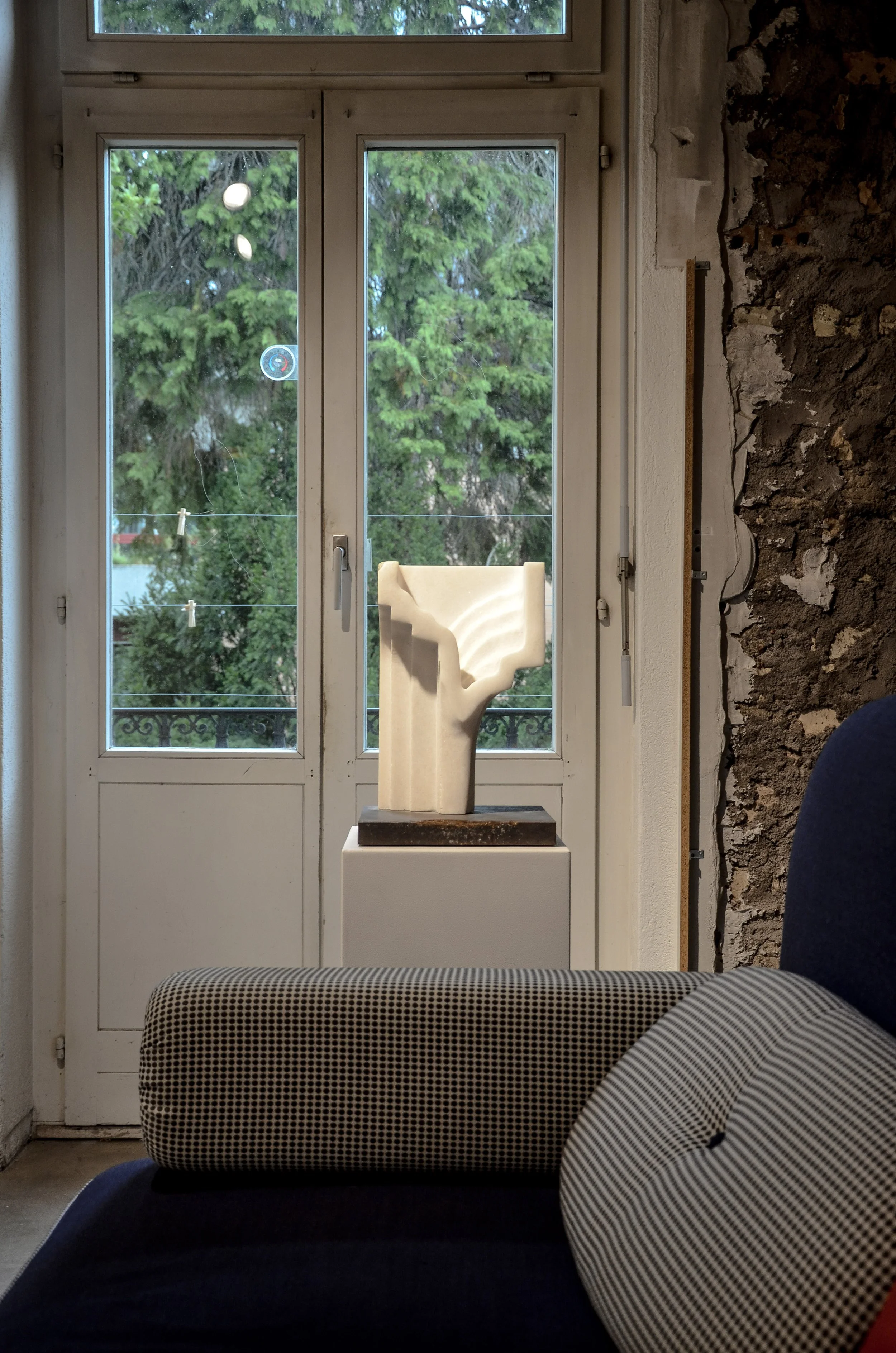
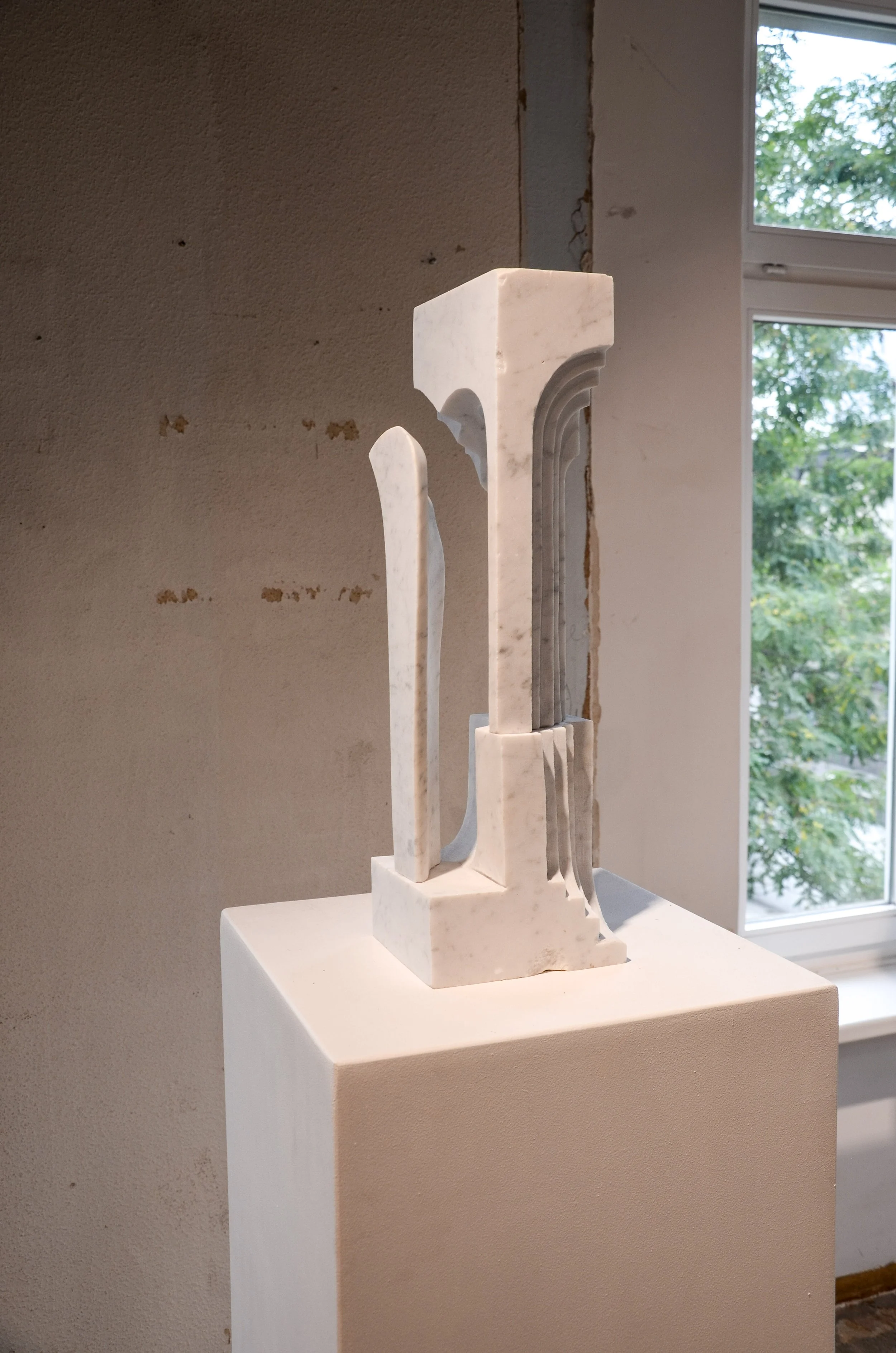
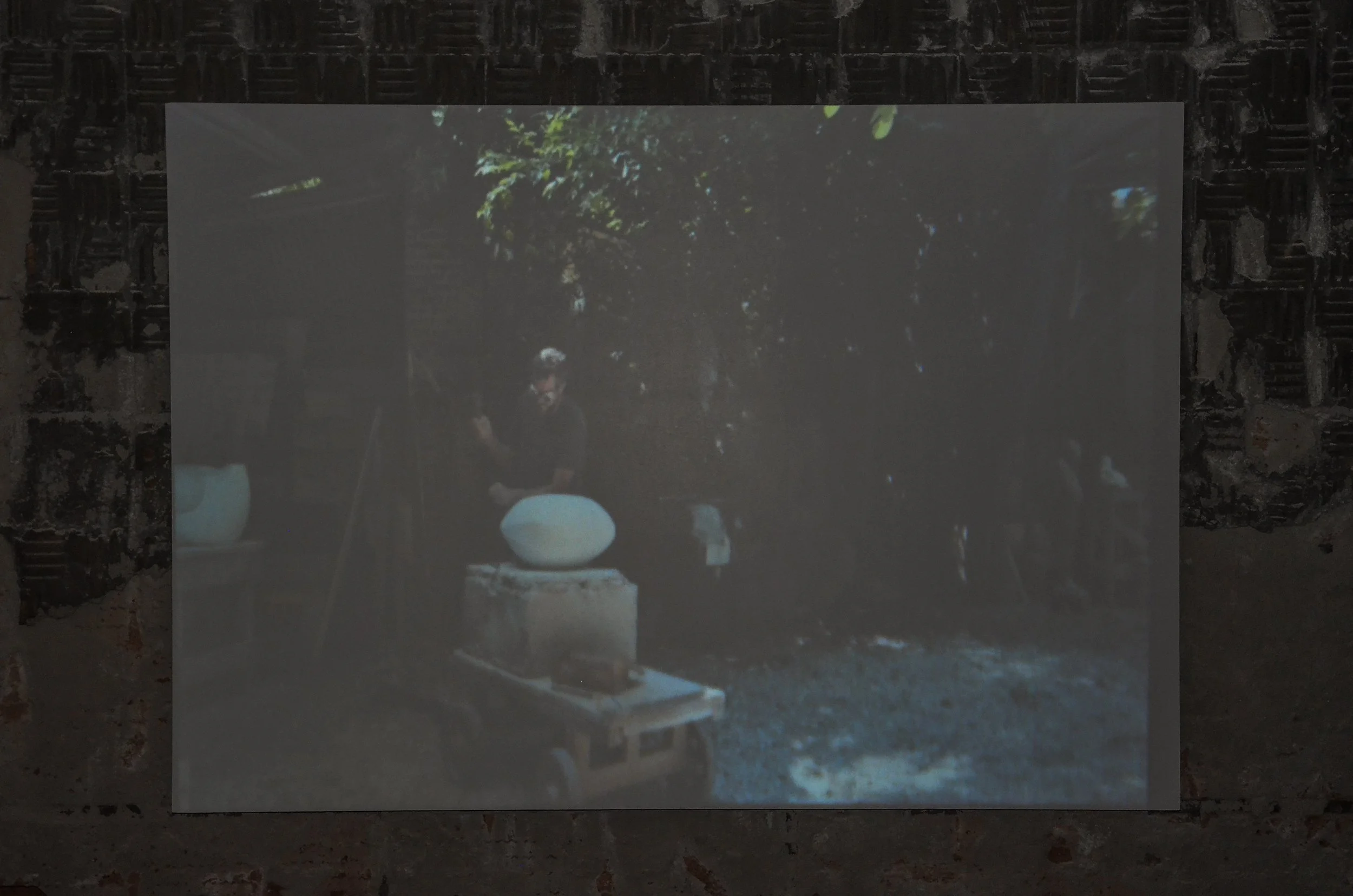
Carrara marble begins as landscape. Formed over millions of years and extracted from mountains worked for centuries, it carries a tension between geological time and human intervention. From antiquity through the Renaissance, marble was repeatedly chosen for temples, monuments and sacred sculpture: a material through which the ephemeral and spiritual could be given permanence. In Pietrasanta, where Jacob Lucius Cartwright works, stone continues to move from mountain to studio, from matter into object. Yet in Cartwright's sculptures, something of the landscape remains.
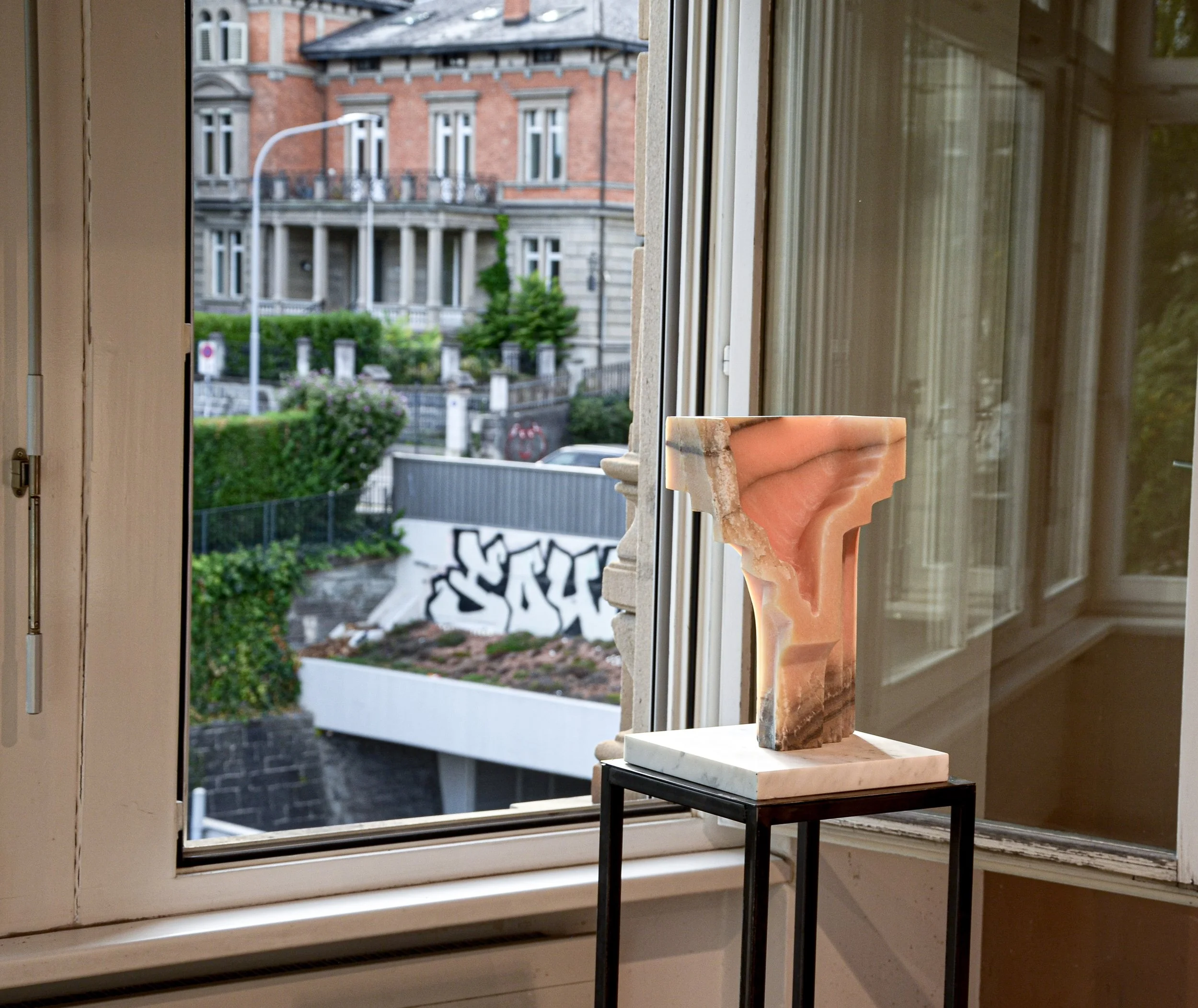
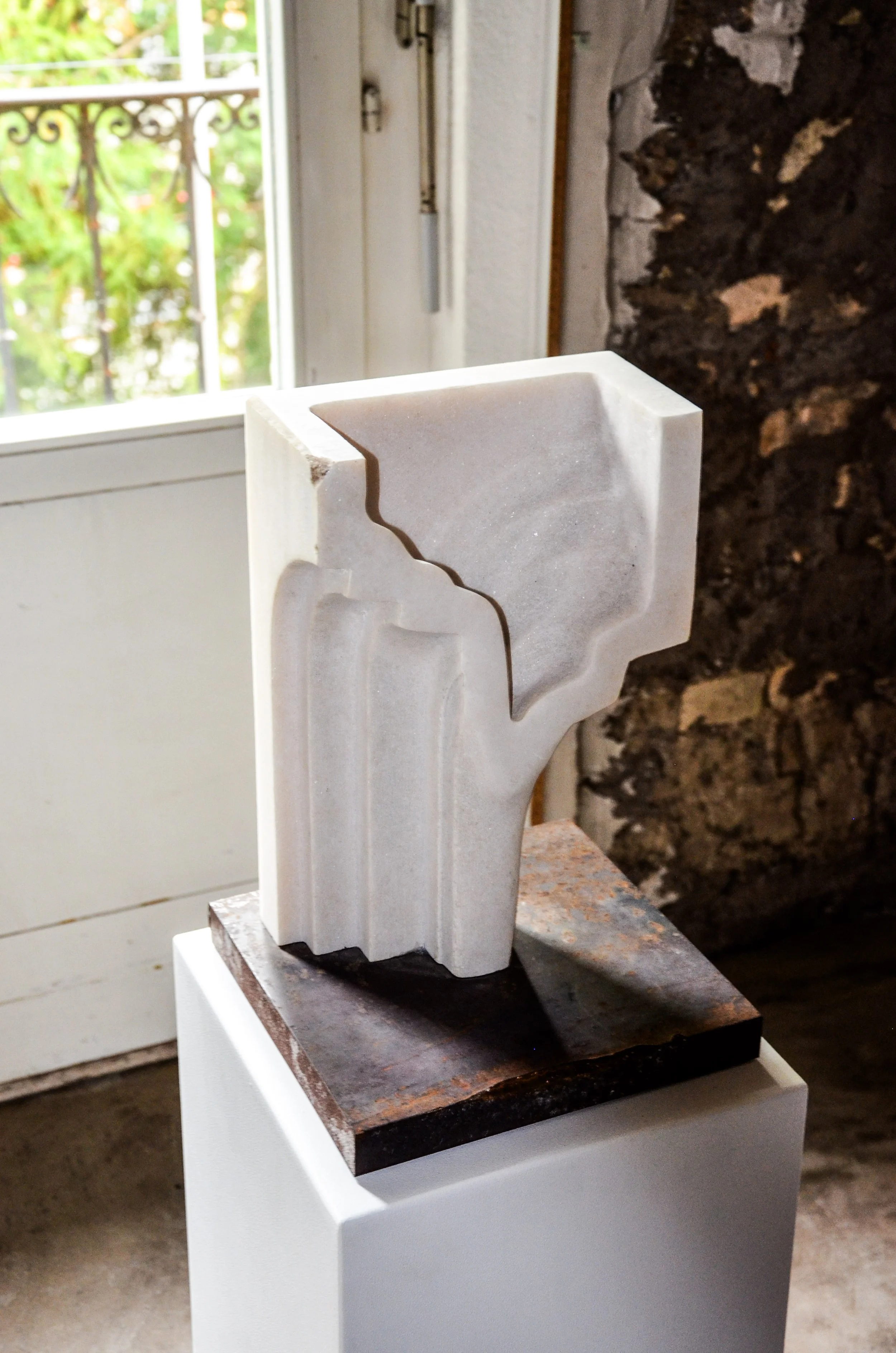
Thresholds begins with this movement between states: landscape and architecture, exterior and interior, material and imagined. Cartwright's sculptures frequently evoke passages, sanctuaries, mountain passes and fragments of structures whose larger architectures remain unknown. They seem less like representations of particular places than evidence of places encountered only partially - something glimpsed, remembered, or still in the process of being understood.
Underlying this body of work is an ethos Cartwright calls The King's Cartographer. The "King" is not a literal figure, but an archetype of the fullest possible self; the cartographer is the figure attempting to map its terrain. Cartwright imagines this terrain as something that can never be apprehended in its entirety. Instead, it reveals itself only in fragments before receding again from view. The sculptures become landmarks within that process: physical markers of something otherwise difficult to locate.
As Cartwright describes it:
"The sculptures are my attempts to capture those moments before they disappear, almost like marking them on a map so I can find my way back to them."
The image of the map offers a way into the work. A map is never the territory itself. It records points of orientation and relationships that allow us to navigate something too vast or uncertain to apprehend all at once. Cartwright's map is therefore not geographical but interior: an attempt to give form to a landscape that is simultaneously discovered and constructed.
The threshold is therefore both physical and psychological. A doorway belongs neither entirely to the room one leaves nor to the room one enters. It occupies an in-between state: a point of departure, arrival and possibility. Cartwright's sculptures inhabit a similar condition, moving between object and architecture, abstraction and recognition, natural form and constructed space. They suggest passage without determining where that passage might lead.
This relationship between physical space and inner experience has long occupied philosophy and architecture. In The Poetics of Space, Gaston Bachelard considers the intimate spaces of the house - rooms, corners, attics, cellars - not simply as architectural structures, but as places in which memory and imagination accumulate. The spaces we inhabit become internalised; they persist within us long after we have physically left them. Juhani Pallasmaa approaches the question through the body, arguing against an architecture experienced primarily through sight. Space is understood through movement, touch, sound, material, scale and atmosphere. Both suggest, in different ways, that we do not simply observe our environments. We enter them, absorb them and remember them; eventually, they become part of us.
Cartwright's practice also considers the possibility of this relationship operating in reverse. If the spaces around us can become part of our inner lives, can an internal landscape be given physical form? Architecture becomes not merely something we inhabit, but a language through which memory, imagination and states of consciousness can be externalised. Cartwright's passages, sanctuaries and thresholds occupy precisely this exchange between an imagined interior and a material world.
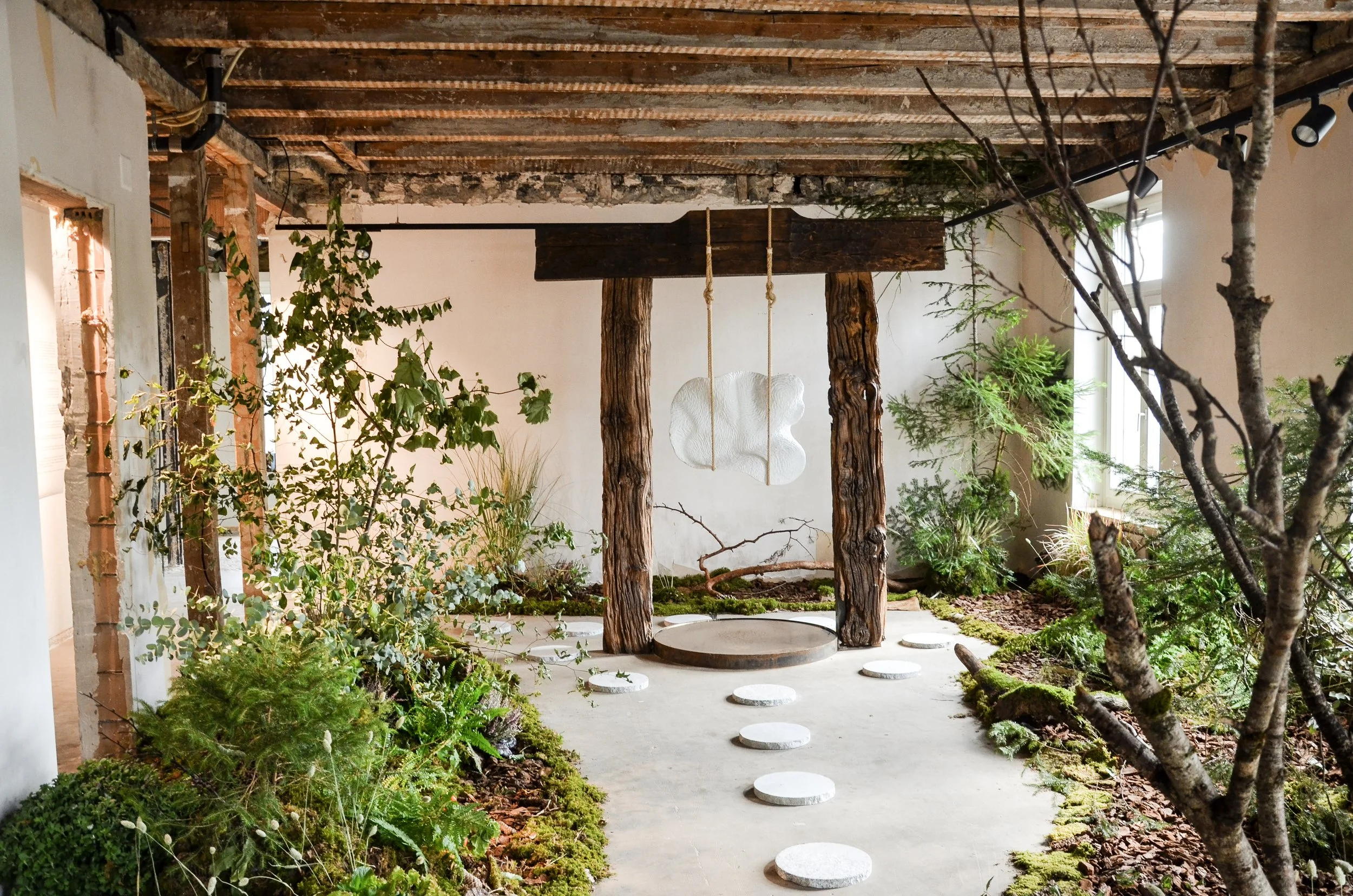
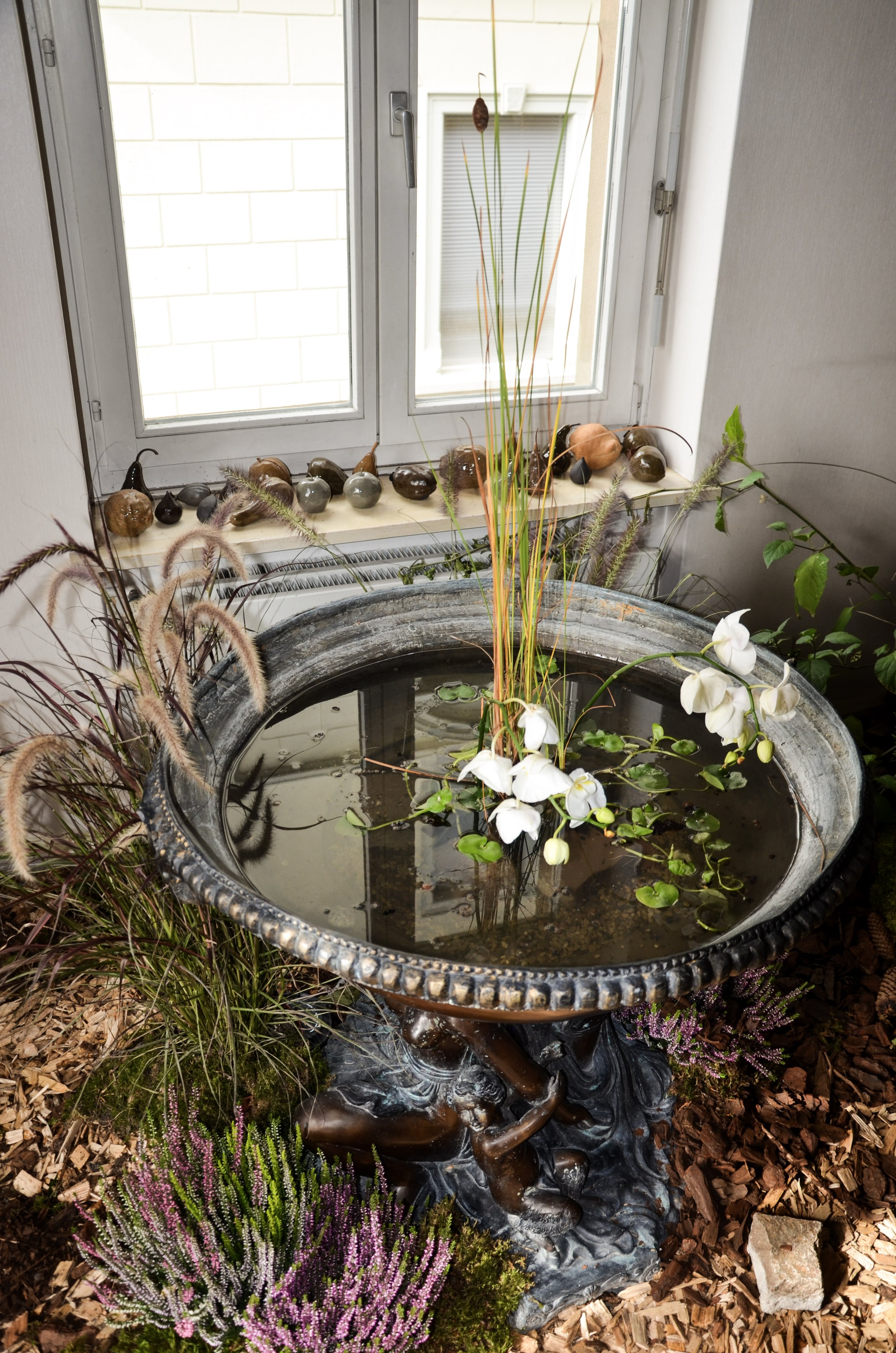
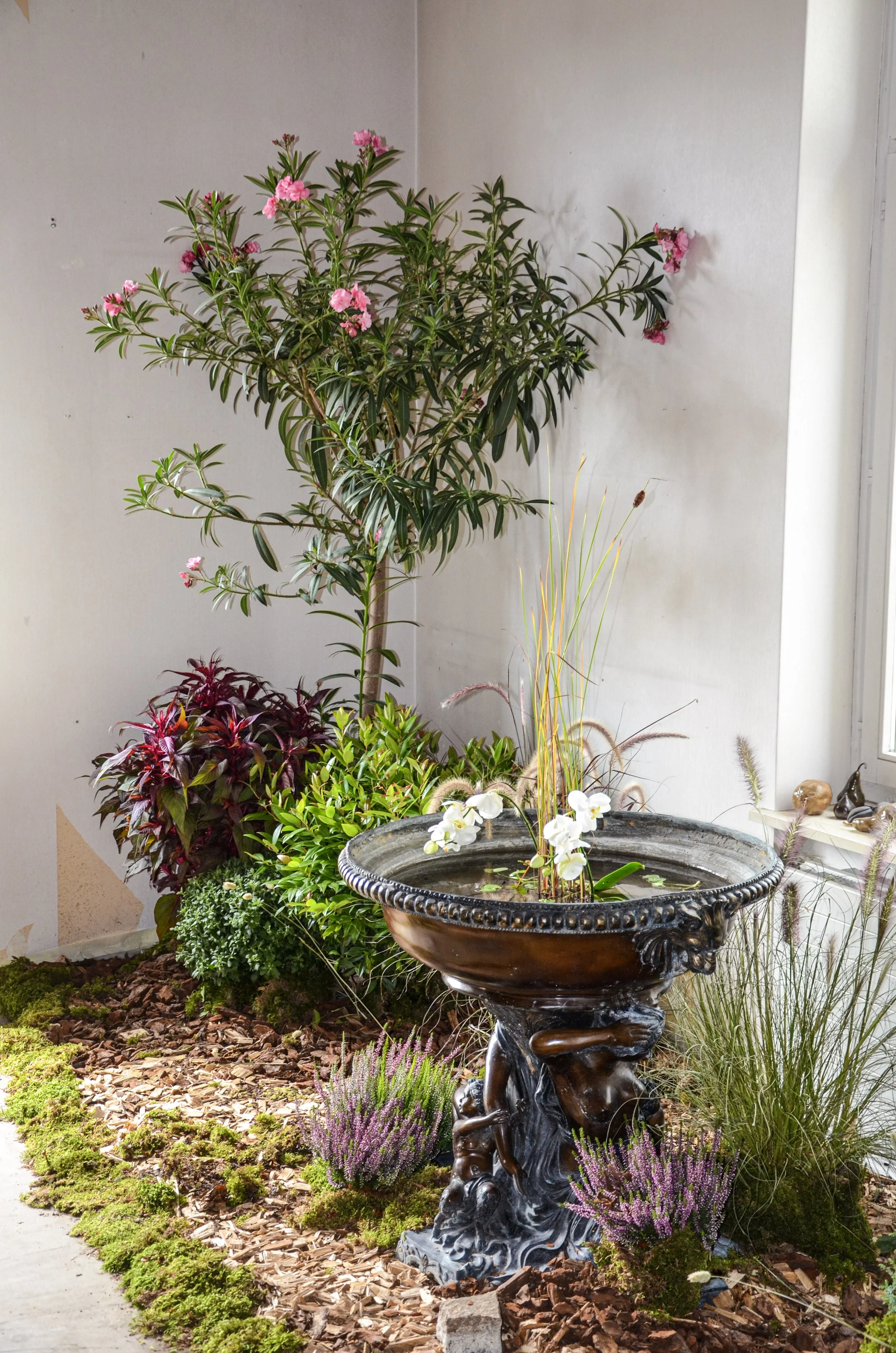
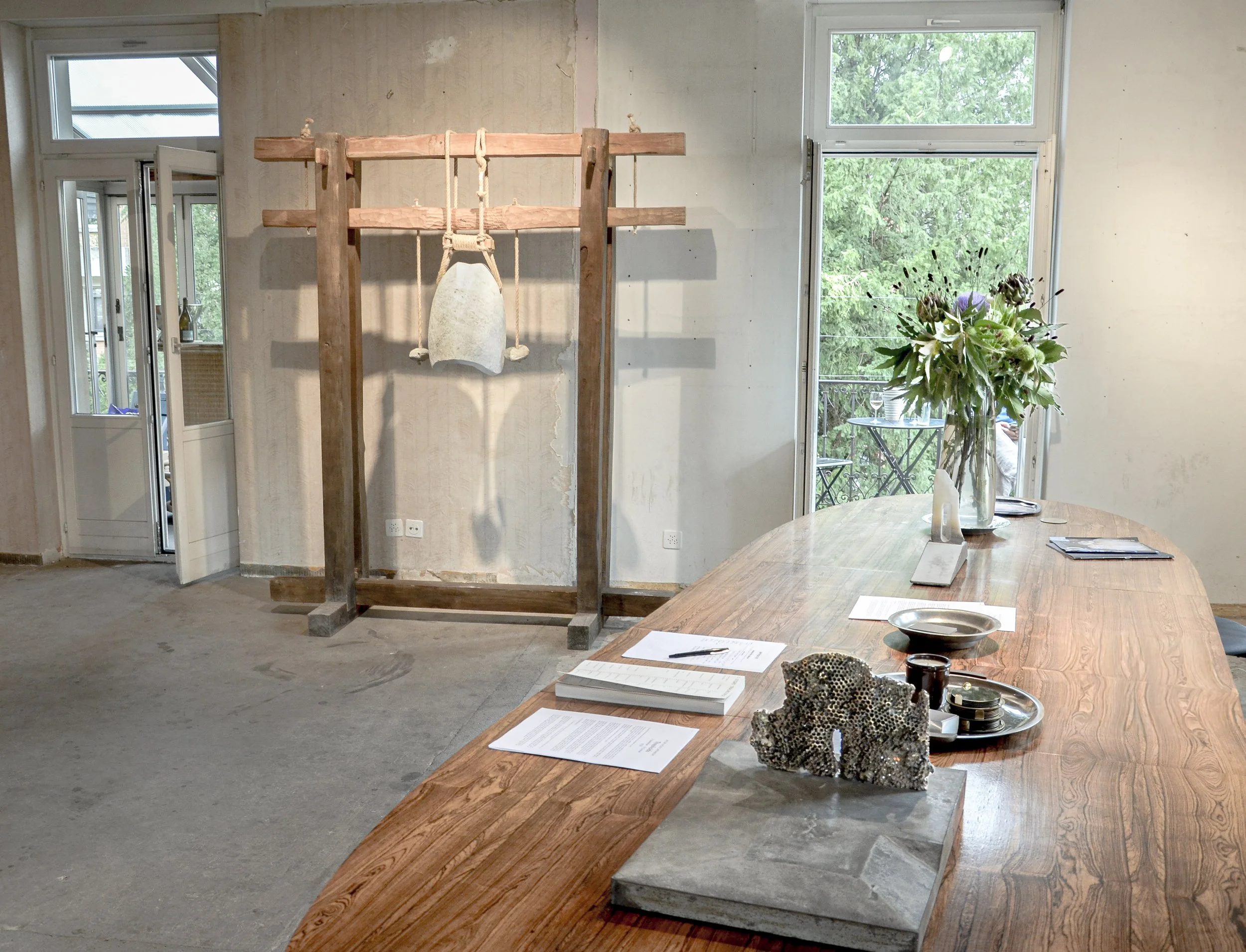
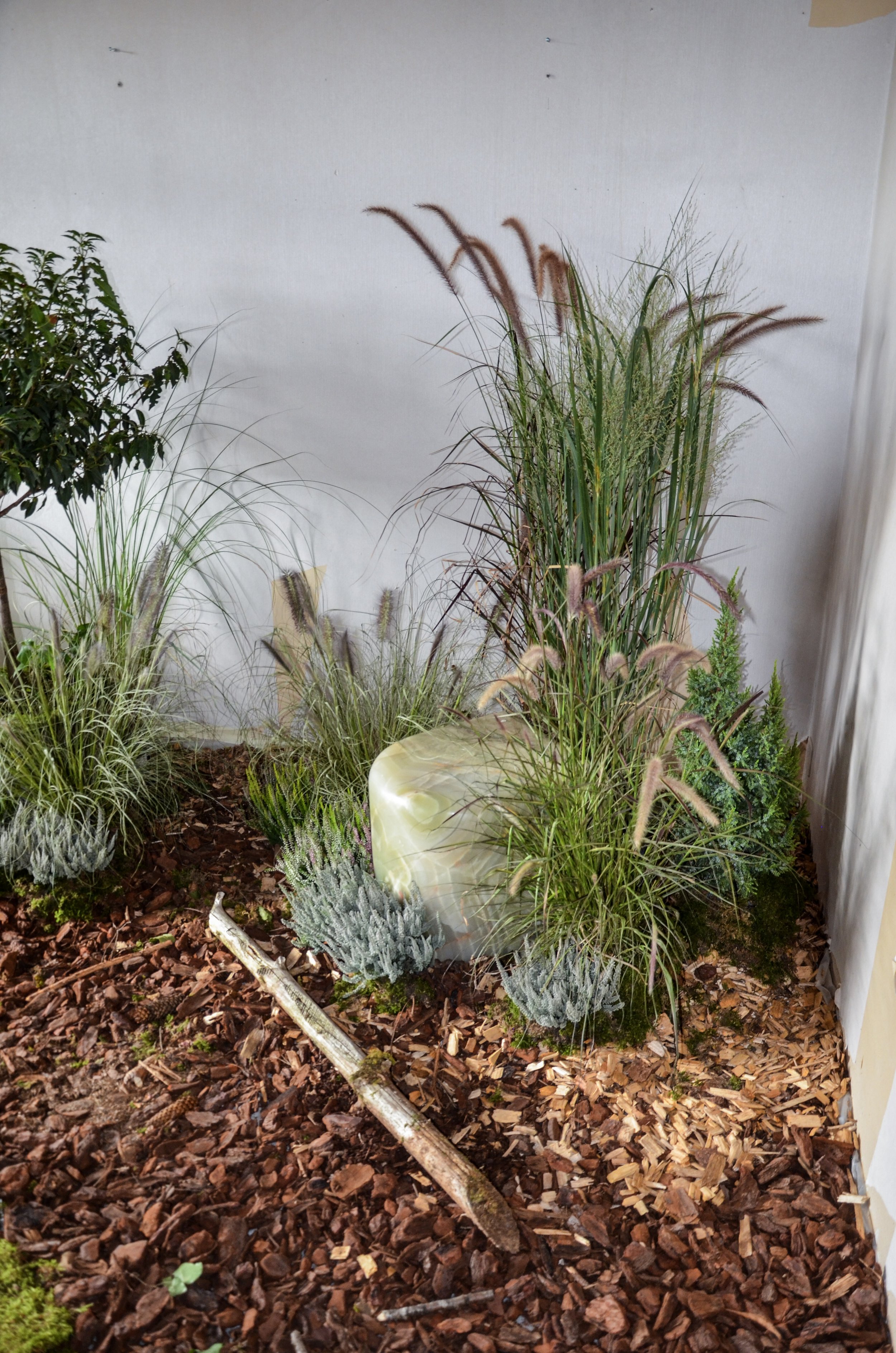
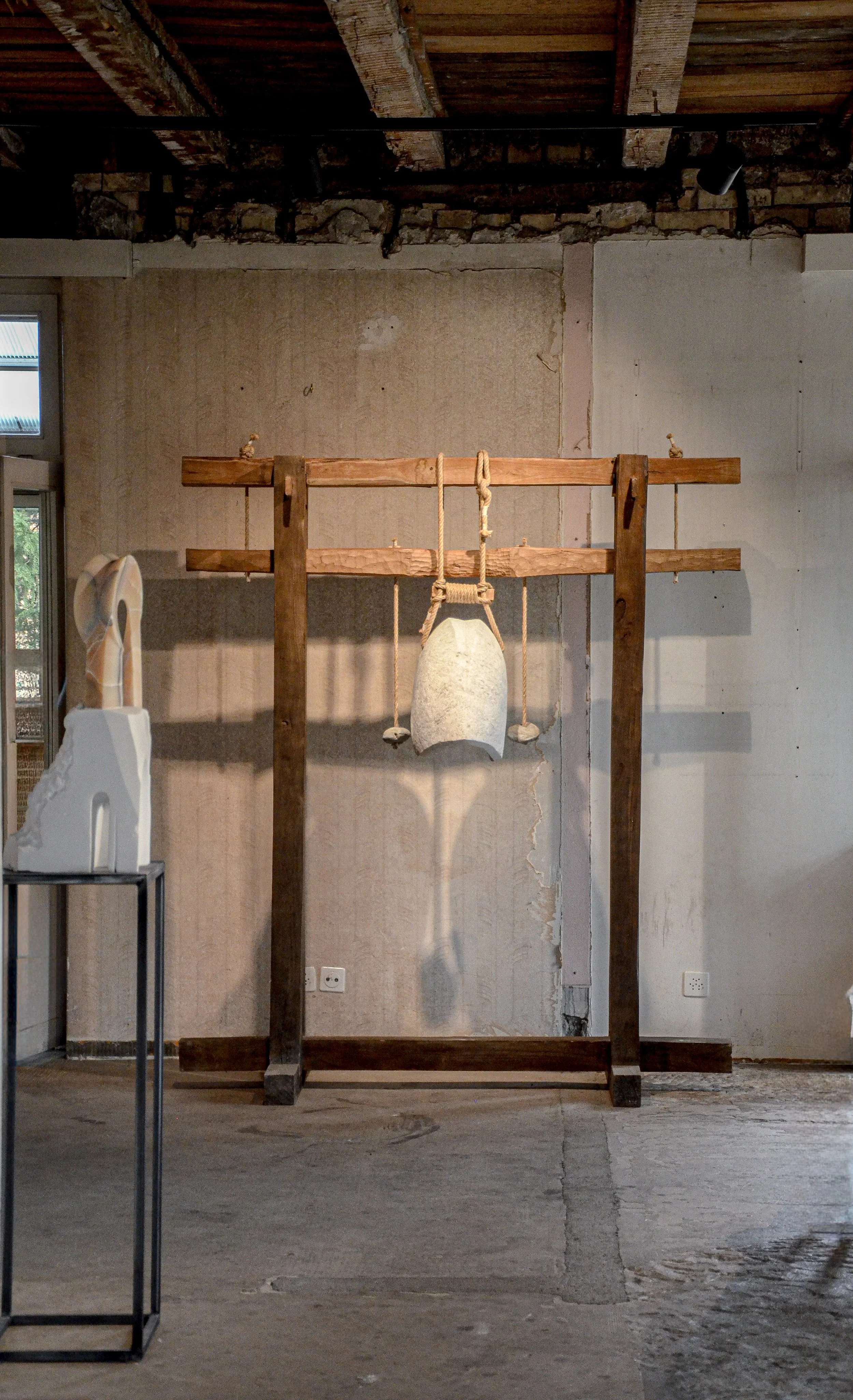
For Thresholds, that exchange moves beyond the individual objects. One room at Anthracite is transformed into a constructed garden landscape. Within it sits a single sculpture, The Passage.
The garden itself occupies a particular position between nature and construction. It is cultivated rather than wild, bounded yet open to the elements: an environment in which nature is arranged, edited and given form. Michel Foucault went further, describing the garden as a form of heterotopia - a real place capable of bringing several otherwise separate spaces together within a single site. In his account, the ancient Persian garden functioned almost as a microcosm, gathering a larger conception of the world within its boundaries.
This idea becomes particularly resonant within the gallery. The garden at Anthracite is neither an attempt to reproduce nature nor simply a backdrop for sculpture. It creates a place within a place, bringing an imagined exterior into the interior of the gallery. At its centre, The Passage is no longer encountered solely as an autonomous object; the landscape around it becomes part of how the work is perceived. Sculpture and environment begin to inform one another, while the distinction between architecture, landscape and object becomes deliberately less certain.
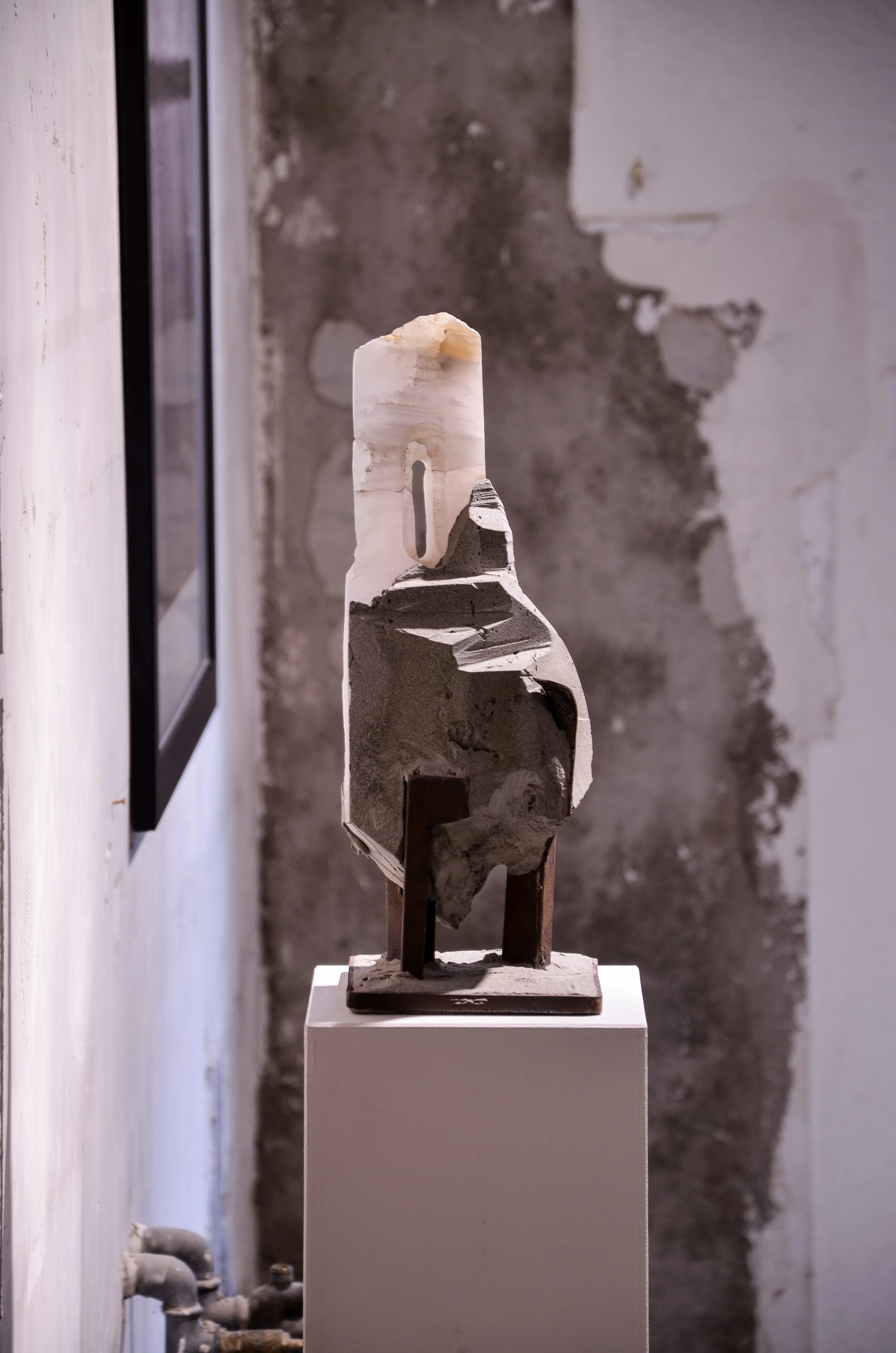
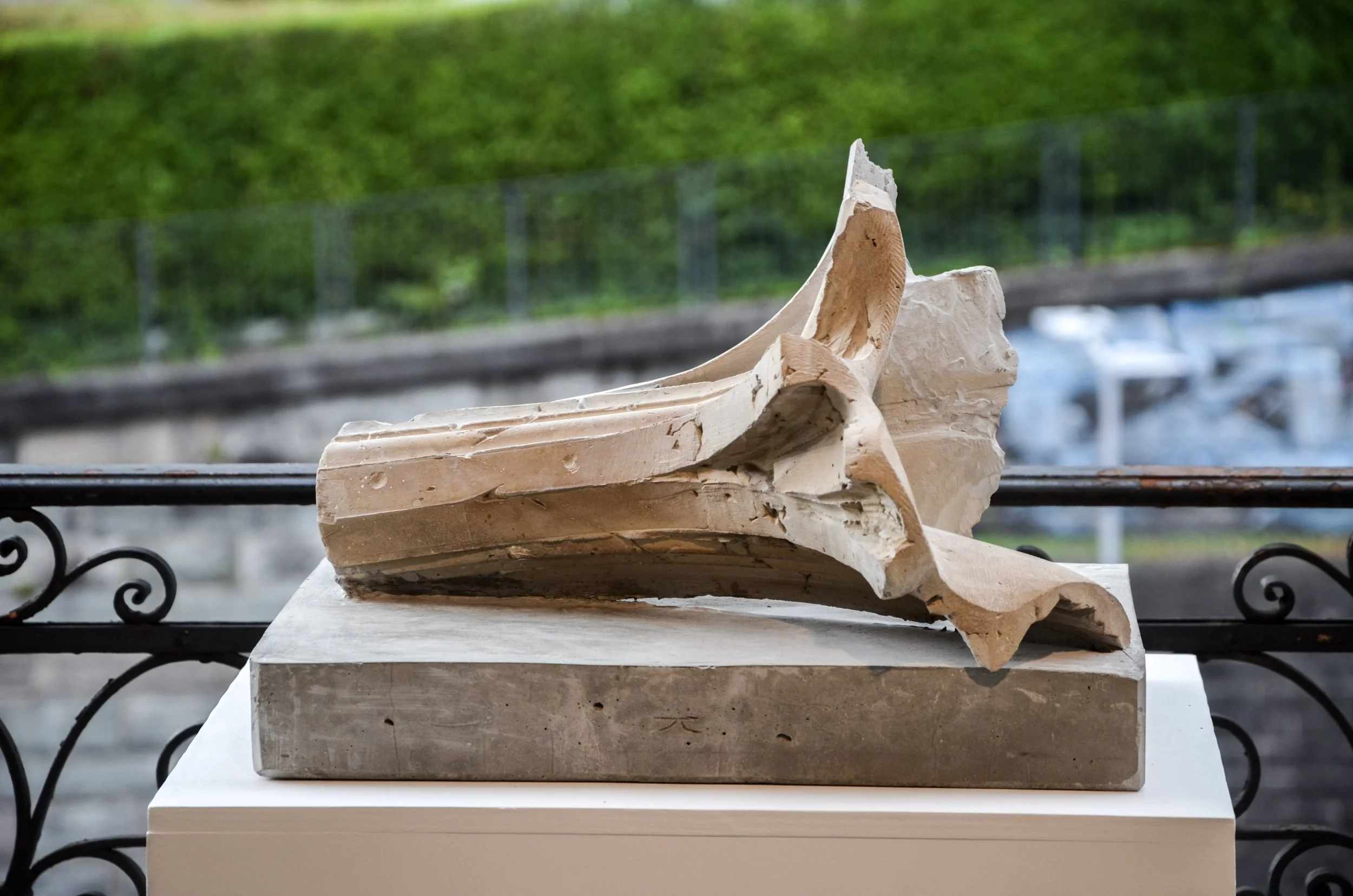
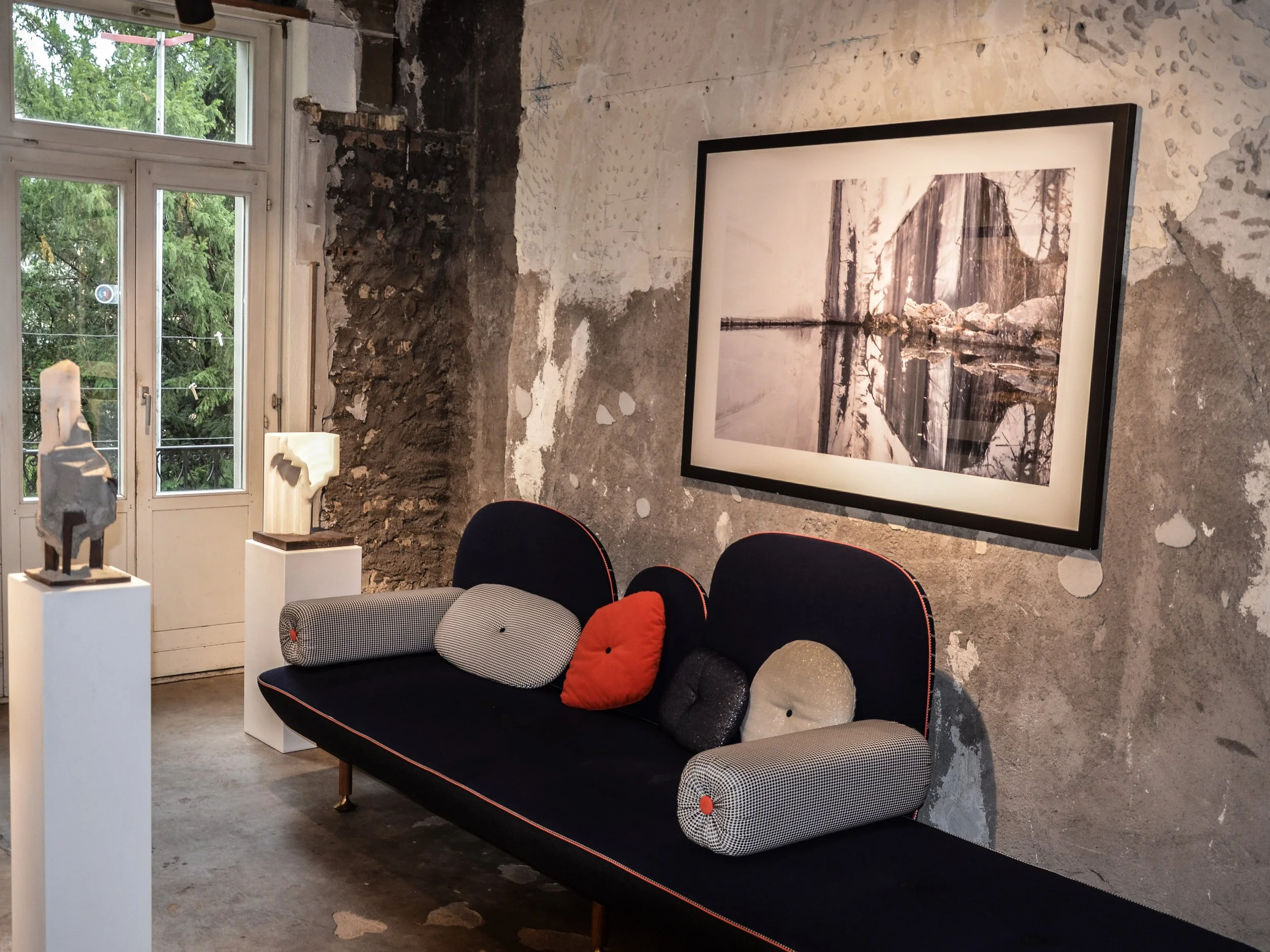
Elsewhere, Cartwright's works remain intimate in scale. We approach them rather than enter them; architecture takes place partly in the imagination. We move around them, look through openings and across surfaces. Marble carries the memory of mountain and quarry while assuming forms that suggest architecture. The encounter continually shifts between what the material is and what it might become.
Cartwright's background as a composer offers another way into this experience. Sound remains, in his words, "an underlying current" in the practice, informing rhythm, proportion and spatial tension. Sculpture becomes a composition of mass and interval, presence and absence.
Perhaps this is why the works resist becoming complete architectures. They do not tell us exactly where we are. A passage does not disclose what lies beyond it; a sanctuary does not prescribe what is sacred; a beacon marks a position without determining the journey.
Cartwright has described his sculptures as "places of pause." Thresholds takes that proposition seriously. It does not ask the visitor to withdraw from the world, nor does it promise transformation. It asks what happens when we approach sculpture not only as an object to be looked at, but as the beginning of a place - and whether, in crossing from one space into another, we might become briefly more conscious of the landscapes we carry within us.
Perhaps the places that remain with us most profoundly are not those we remember most clearly, but those that quietly altered our sense of who we could become.
Written by Ebba Wallmen,
Founder & Curator, Anthracite 2026